
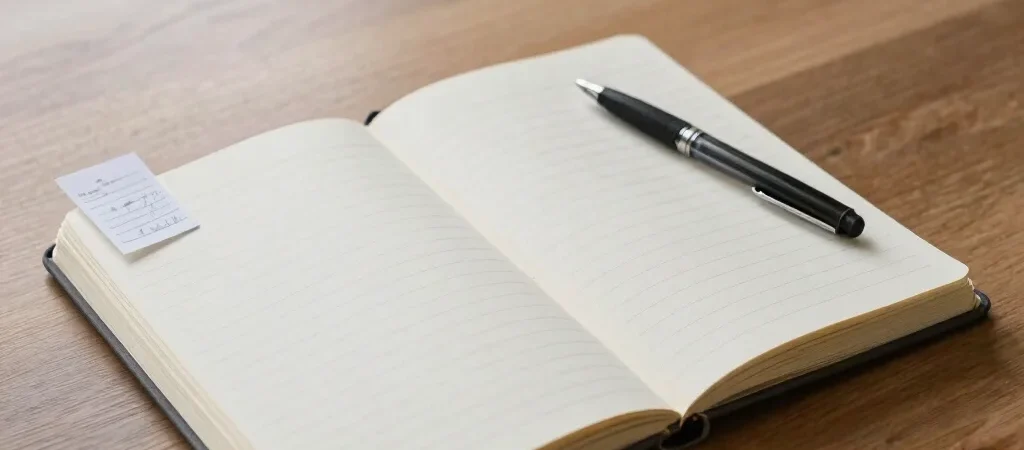
A blank notebook can feel like an invitation to design a better system: numbered pages, labeled sections, rules for what belongs. But if the goal is to catch a thought before it disappears, a notebook can be more useful when it asks less of you.
Write Before You Organize
Put down the sentence, question, or detail while it is still present. It might be a phrase overheard on the bus, a reminder about a recipe, or the reason a meeting felt harder than expected. Let the entry be incomplete if that is all you have.
Let Different Things Sit Together
A page can hold a grocery item beside an idea for an essay. That mix may look untidy, but it reflects how thoughts actually arrive: not in folders, and rarely in the order we would choose for them.
Return Without Catching Up
When you open the notebook again, you do not need to review every page or turn it into a project. Read until something catches your attention, add a date or margin note if it helps, then move on. The useful habit is having a place to put a thought, not maintaining a perfect record.